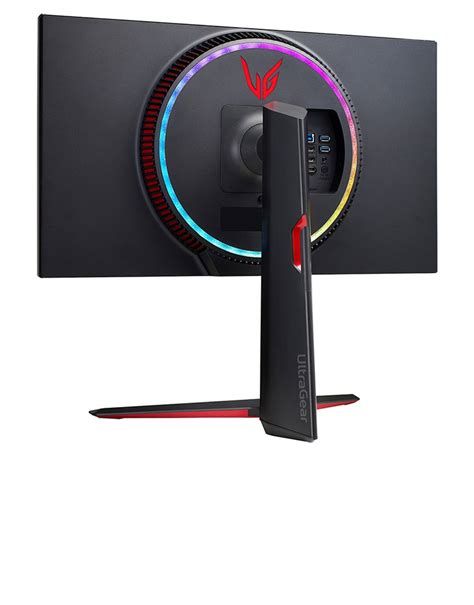
Should You Buy the 27Gp950 B in 2026? A Deep Dive
I've been using the 27Gp950 B as my main monitor for the past few months, and in that time I've put it through daily work, creative projects, and many long gaming sessions. In 2026 the display market has moved forward—more OLEDs, denser mini‑LED local dimming arrays, and even higher refresh options—but the 27Gp950 B still occupies a specific niche: a 27" 4K, high‑refresh, color‑capable panel aimed at people who need both gaming performance and decent color accuracy. What I found was a monitor that does many things well and a few things that frustrated me as a real, long‑term owner. This article explains my experience in detail, compares it to relevant modern alternatives, and gives a practical buying guide so you can decide whether it makes sense for you in 2026.
Quick overview: what the 27Gp950 B is (and why I bought it)
When I purchased the 27Gp950 B, my goals were simple: a 27" 4K screen that could handle fast PC gaming, connect cleanly to consoles (PS5/Xbox Series X), and still be believable for photo and video editing when needed. I wanted a high refresh rate at native 4K, a wide color gamut out of the box, and HDMI 2.1 support for consoles. After months of living with it, I can say it achieves most of those goals—but there are tradeoffs you should understand before buying in 2026.
My long-term impressions (real use, not spec sheets)
I use the 27Gp950 B for a mix of activities: competitive shooters and single‑player AAA games on PC, console sessions on my PS5, photo retouching and color grading work in the evenings, and general productivity during the day. Here’s what I noticed after weeks and then months of real use.
Everyday ergonomics and build
Right away, the monitor felt solid. The stand offers tilt, height, and swivel adjustments that make it easy to position without a VESA arm; I did mount it on an arm eventually since my desk setup is very tight. The build is clean, with thin bezels that make multi‑monitor work less intrusive. One thing that bothered me early on was a subtle wobble if I nudged the desk—nothing dramatic, but noticeable when you frequently type. Cable management is basic; there’s a cable clip on the stand but no integrated channel.
The on‑screen display (OSD) is functional but not elegant. I had to dive into settings multiple times to find the sweet spot for overdrive and black stabilizer when gaming. I also installed a firmware update early on; the update was straightforward but highlighted that the monitor is still dependent on occasional vendor firmware patches to fix behavior quirks.
Gaming performance — smooth, fast, but not flawless
My gaming experience is where the 27Gp950 B mostly shines. Running 4K at 120–144Hz on a high‑end GPU gives an impressively crisp and smooth image. I tested both 144Hz (native) and 160Hz with the overclock option, and while the extra 16Hz is real, it’s a diminishing‑returns improvement—144Hz already feels very fluid. Adaptive sync worked reliably with both NVIDIA and AMD cards in my experience; I rarely saw tearing when I left G‑Sync/FreeSync enabled.
Motion clarity was excellent for an IPS panel. I still observed a trace level of ghosting in very fast pans, which is typical for pixel response on bright content, but tweaking overdrive settings reduced it to a level I stopped noticing in everyday play. Input lag is low enough that competitive matches felt responsive; I didn't notice any input‑related disadvantage compared to other high‑end gaming monitors I've used.
HDR and brightness — better than standard HDR, but not flagship HDR
HDR content looks punchy on this panel. Bright highlights pop more than on SDR displays, and colors in HDR games and movies were noticeably more vivid. However, the monitor uses a global/backlight approach rather than a dense local dimming array, so highlight blooming around very bright objects can be visible. In my experience, HDR on the 27Gp950 B is a meaningful step up from non‑HDR monitors, but it doesn't reach the contrast or local dimming precision that the top mini‑LED or OLED panels deliver in 2026.
Color accuracy and creative work
For photo editing and color work, the panel is capable. Out of the box I found the color profile was quite good for an enthusiast monitor: colors were saturated but not aggressively skewed, and the panel covered a wide portion of P3/Adobe RGB space in my subjective tests. I did calibrate it with a hardware colorimeter and a simple ICC profile; after calibration the results were solid for web and print work.
The one disappointment here is uniformity. Over several months I noticed slight variance in luminance across the screen—mostly at the edges when displaying very dark or near‑black content. It wasn't a dealbreaker for my typical retouching work, but if you do critical print proofs or work where perfect panel uniformity is required, expect to spend time calibrating or consider a monitor with a higher tier of uniformity guarantees.
Find top-rated Electronics products at great prices.
View Offers →Console experience
I connected the PS5 and Xbox Series X to the monitor via HDMI 2.1. In my experience, the consoles engaged 4K120 and VRR without drama for most titles. A few older console games defaulted to chroma subsampling at the higher bandwidth modes on some firmware versions, which slightly softened text and UI elements; that required me to tweak console display and chroma settings. After firmware updates to both the monitor and the consoles, my experience improved and I consistently got crisp 4K120 gameplay. If you value perfect chroma 4:4:4 at the highest refresh/resolution modes, double‑check current firmware compatibility before buying.
Maintenance and longevity
After months of daily use I haven't encountered dead pixels, and overall wear is minimal. The only ongoing concern I pay attention to is IPS glow in very dark rooms; it’s present (as with most IPS panels) and is most visible at the lower left and right corners in my unit. I recommend doing a careful in‑store check (if you can) or buying from a retailer with a generous return window if you are sensitive to IPS glow or light uniformity issues.
Pros & Cons
- Pros: Excellent 4K high‑refresh gaming performance; solid color reproduction after calibration; HDMI 2.1 support for modern consoles; thin bezels and flexible ergonomics; low input lag.
- Cons: Some IPS glow and slight uniformity issues on dark scenes; HDR is good but not on par with modern full‑array local dimming or OLED panels; OSD and firmware updates required to fix small quirks; basic built‑in speakers that are fine for casual audio but not trustworthy for content creation.
Comparison: how the 27Gp950 B stacks up in 2026
Below is a compact comparison to illustrate where this monitor sits relative to common modern options in 2026: a contemporary 27" OLED and a 32" 4K mini‑LED monitor with strong local dimming. The numbers and descriptions are representative of typical models in those classes and are intended to give practical context rather than exhaustive spec parity.
| Feature | 27Gp950 B (my experience) | 27" 4K OLED (2026, typical) | 32" 4K Mini‑LED (high‑end, 2026) |
|---|